Watch the guide video
Quick answer
Choose the turntable that fits your whole listening setup, not just the one with the longest feature list. For most home listeners, the essentials are stable speed, a decent tonearm and cartridge, proper support for 33 and 45 rpm records, a suitable output for your amplifier or speakers, and enough adjustability or upgrade potential for your needs.
If you want the easiest route, consider an automatic or Bluetooth model with a built-in phono stage. If sound quality and long-term upgrading matter more, a simpler manual turntable from a hi-fi-focused range, paired with good speakers and careful setup, is usually the more sensible direction.
Key Takeaways
Start by deciding how you will listen: through an amplifier and passive speakers, powered speakers, headphones, Bluetooth speakers, or a computer. This determines whether you need a built-in phono stage, Bluetooth, USB or extra boxes.
Do not spend the whole budget on the turntable if your speakers are weak. Vinyl playback is a system, and the cartridge, phono stage, amplifier and speakers all affect the result.
A good basic turntable should spin at the correct speed, hold the record securely, track without damaging records, and connect cleanly to your system. These are more important than retro styling, lights, extra radio features or a long list of formats.
Manual turntables can offer better value and fewer compromises, but automatic models are easier for beginners and reduce the risk of leaving the stylus playing the run-out groove. Bluetooth and USB are useful conveniences, not automatic signs of better sound.
Check what can be replaced before buying. A replaceable stylus is important. A cartridge that can be upgraded is useful.
A fixed, low-grade cartridge or tonearm may limit the turntable’s life as your interest grows.
Who This Guide Is For
This guide is for people buying their first proper record player, replacing an all-in-one unit, or upgrading from an entry-level deck. It is also useful if you have inherited records and need a safe, sensible way to play them.
If you mainly want background music and easy operation, your priorities will be different from someone building a hi-fi system around vinyl. A listener using powered bookshelf speakers may need a turntable with a built-in phono stage, while someone with a traditional amplifier may not. A student in a small room may value Bluetooth or compact size; a collector with valuable pressings should prioritise tracking quality and record care.
It is not aimed at specialist DJ use, though some buying principles still apply. DJ turntables have different priorities, including torque, pitch control, robustness and cueing. A home listening deck and a scratch turntable are not the same tool.
Start With the System, Not the Turntable
A turntable does not work in isolation. The signal from a cartridge is very small and needs the right type of amplification before it reaches speakers. This is where many buying mistakes happen.
There are three common setups. First, a turntable into an amplifier or receiver, then into passive speakers. Second, a turntable into powered speakers, where the amplifier is built into the speakers.
Third, a turntable sending audio wirelessly to Bluetooth speakers or headphones.
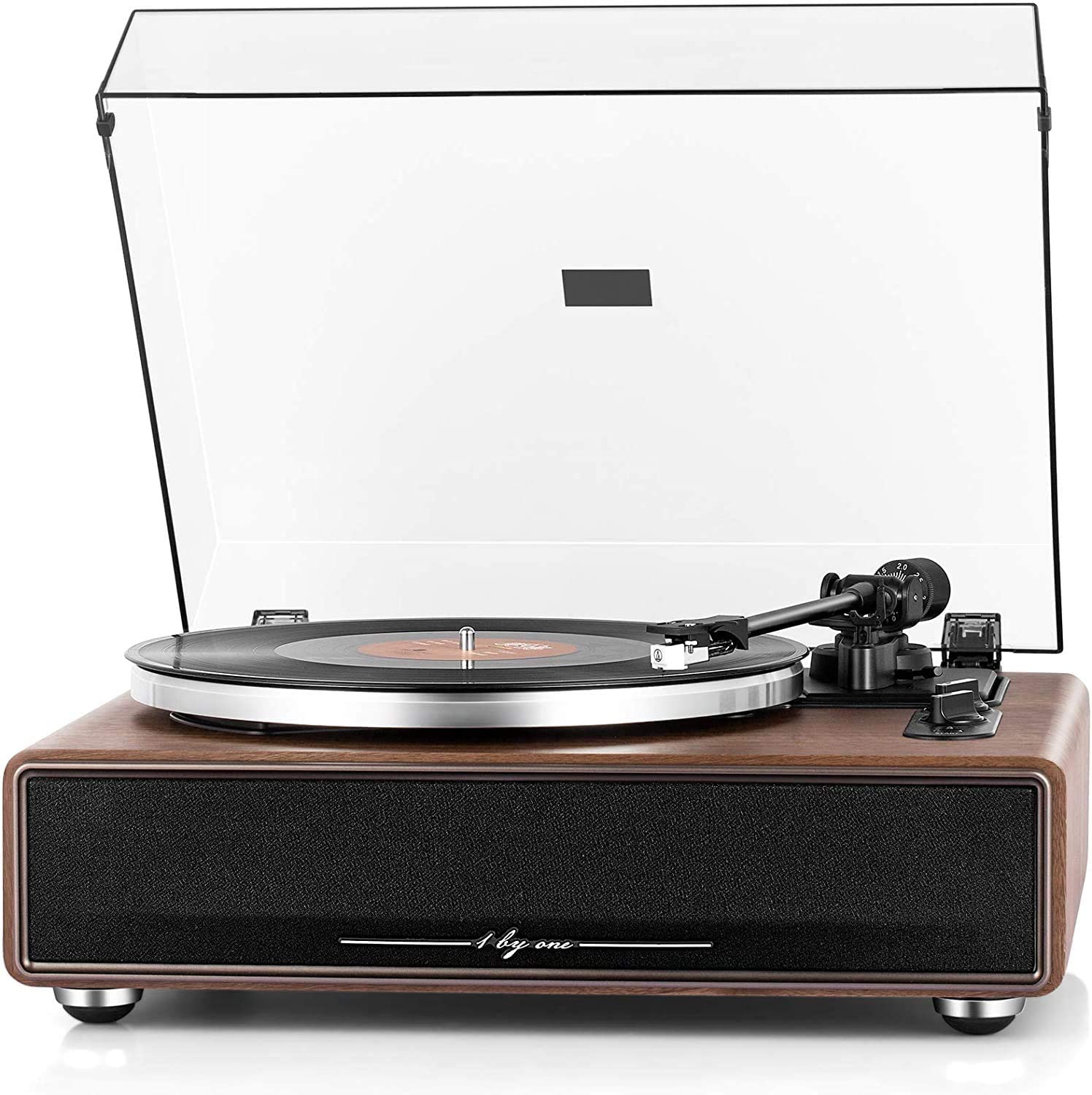
The key term is phono stage, sometimes called a phono preamp. This boosts the tiny cartridge signal and applies the correct equalisation so records sound balanced rather than thin and quiet. Some turntables have a built-in phono stage.
Some amplifiers have a phono input. Some powered speakers accept a line-level input but still need the turntable or an external box to provide phono amplification.
Before choosing a model, look at the sockets on the equipment you already own. If your amplifier has an input labelled Phono, you can usually use a turntable without a built-in phono stage. If it only has Aux, Line, CD or similar inputs, you need a turntable with a built-in phono stage or a separate phono preamp.
If you plan to use powered speakers such as bookshelf speakers from the local catalogue, check whether they have analogue inputs and whether the turntable can output line level.
Bluetooth simplifies placement and reduces cables, but it converts the turntable’s analogue signal to digital for wireless transmission. That may be perfectly acceptable for casual listening, but it is not the purist route if maximum fidelity is your aim.
What to Consider Before Buying
Think about where the turntable will live. It needs a level, stable surface away from heavy footfall, speaker vibration and wobbling furniture. A deck placed on the same lightweight table as a bass-heavy speaker may skip or feed back.
If you have suspended floors, a wall shelf or more solid furniture may matter as much as the turntable itself.
Decide which records you will play. Most LPs use 33⅓ rpm and most singles use 45 rpm. Some older records use 78 rpm, but playing shellac 78s properly requires the correct speed and a suitable stylus, not just a turntable with a 78 setting.
Do not assume every three-speed record player is suitable for every old record.
Consider how hands-on you want to be. Manual turntables require you to lift and lower the tonearm and return it at the end. Semi-automatic and automatic models reduce effort and can be kinder if you are nervous about cueing.
Models such as the Denon DP-300F, Pro-Ject Automat A1 and Audio-Technica AT-LP3XBT illustrate the automatic category, while many Rega, Pro-Ject and Fluance decks are aimed more at manual hi-fi use.
Check cartridge and stylus support. The stylus is the tiny diamond tip that sits in the groove. It wears with use and must be replaceable.
The cartridge is the small body that holds the stylus and converts groove movement into an electrical signal. A turntable that accepts standard cartridge upgrades can grow with you, but it may also require more careful setup.
Finally, plan for the total cost of ownership. You may need speakers, a phono stage, a record brush, a stylus cleaner, inner sleeves, a tracking force gauge or a better support. These accessories should not dominate the purchase, but leaving no budget for them can spoil the experience.
Features That Matter Most
Speed stability is fundamental. A turntable that runs unevenly can make piano notes, sustained vocals and guitar chords sound wobbly. Look for designs with a decent motor system and a platter that rotates consistently.
You do not need to obsess over numbers as a beginner, but speed accuracy matters more than decorative features.
The tonearm matters because it guides the stylus through the groove. A better arm holds the cartridge steadily and applies the correct downward pressure, called tracking force. Too little force can cause mistracking and distortion; too much can increase wear.
Adjustable tracking force is a useful feature, especially if you plan to change cartridges.
A proper counterweight is preferable to a crude spring-only arrangement. Anti-skate is also useful. It applies a small outward force to balance the natural pull of the arm towards the centre of the record.
In plain terms, it helps the stylus sit more evenly in the groove.
The cartridge and stylus have a large effect on sound. An elliptical stylus, where fitted, can trace groove detail better than a very basic conical stylus, though alignment and tracking are still important. The best cartridge is not always the most expensive one; it must suit the tonearm and be installed correctly.
The platter and plinth also play a role. The platter supports the record, and the plinth is the turntable body. Heavier or better-damped designs can help reduce vibration, though build quality matters more than weight alone.
A dust cover is practical, but it should not rattle or transmit vibration during playback.
Essential features for most buyers are reliable 33 and 45 rpm playback, a replaceable stylus, sensible tonearm design, a compatible output, and stable construction. Optional conveniences include Bluetooth, USB recording, automatic operation, built-in speakers, pitch control, radio, CD, cassette, display screens and remote controls.
Manual, Automatic, Bluetooth and USB: Which Type Suits You?
Manual turntables are the traditional hi-fi choice. You place the arm on the record and lift it off at the end. They are simple, often mechanically straightforward, and can be excellent for buyers who want sound quality and upgrade potential.
Examples in the wider market include ranges such as Rega Planar, Pro-Ject Debut and Fluance RT models, though the right choice still depends on the rest of your system.
Automatic turntables start and stop the record for you. Some lift and return the arm at the end, which is helpful if you are distracted or new to vinyl. They can be slightly more mechanically complex, but for many households the convenience is worth it.
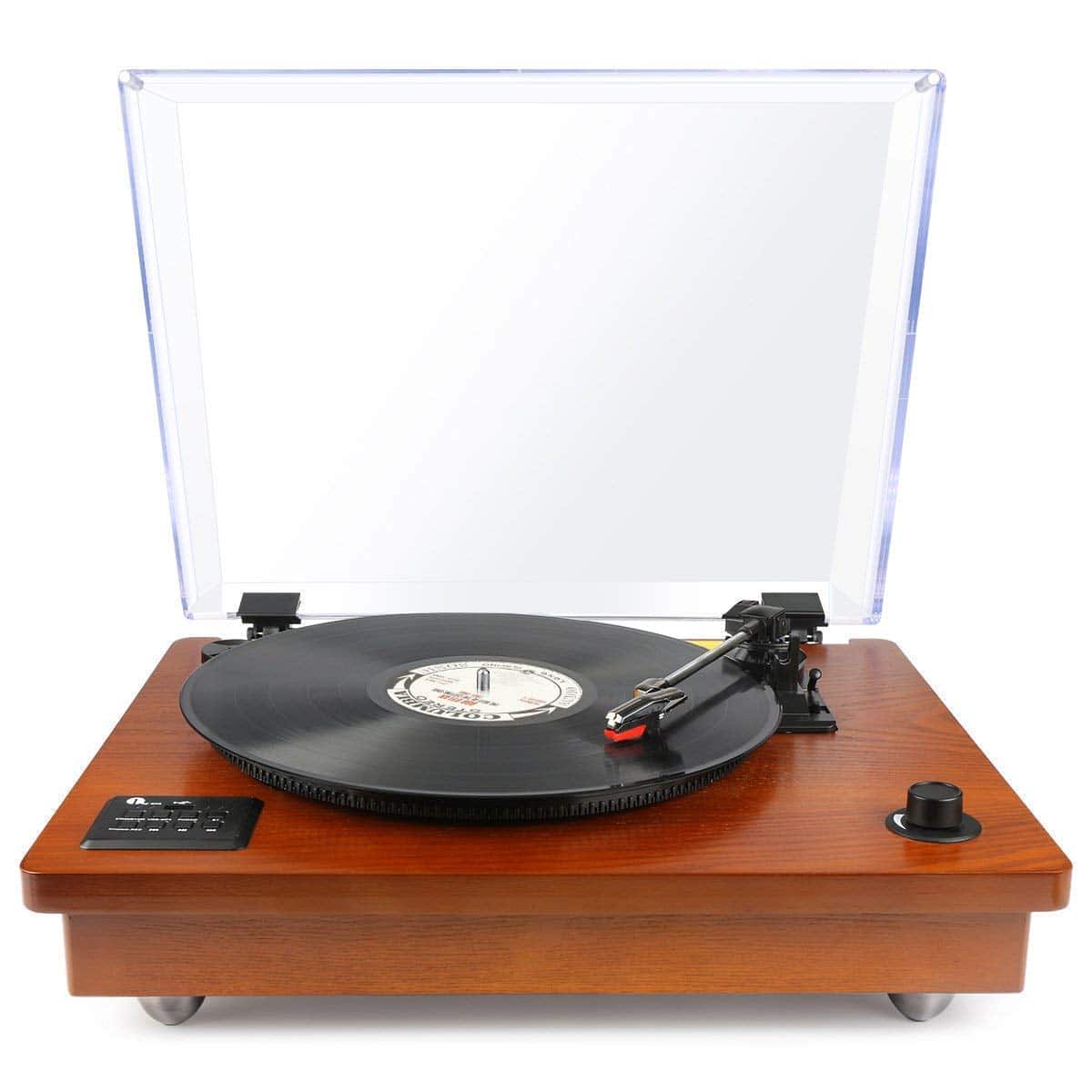
Bluetooth turntables are useful if you cannot run cables or already own wireless speakers. They can make vinyl accessible in rooms where a traditional hi-fi system is impractical. The trade-off is that Bluetooth adds digital conversion, possible latency, pairing issues and dependence on the receiving speaker’s quality.
A Bluetooth model such as the Sony PS-LX310BT or Audio-Technica AT-LP70XBT is best understood as a convenience-led choice rather than a universal sound-quality upgrade.
USB turntables are designed to connect to a computer for recording records. They are useful for archiving rare singles, sampling, or making digital copies for personal use. If digitising is not a priority, USB should not be high on your list.
Models in the catalogue such as the Audio-Technica AT-LP120USBHCBK, Denon DP-200 USB, Lenco L-400 and Sony PS-HX500 illustrate this category.
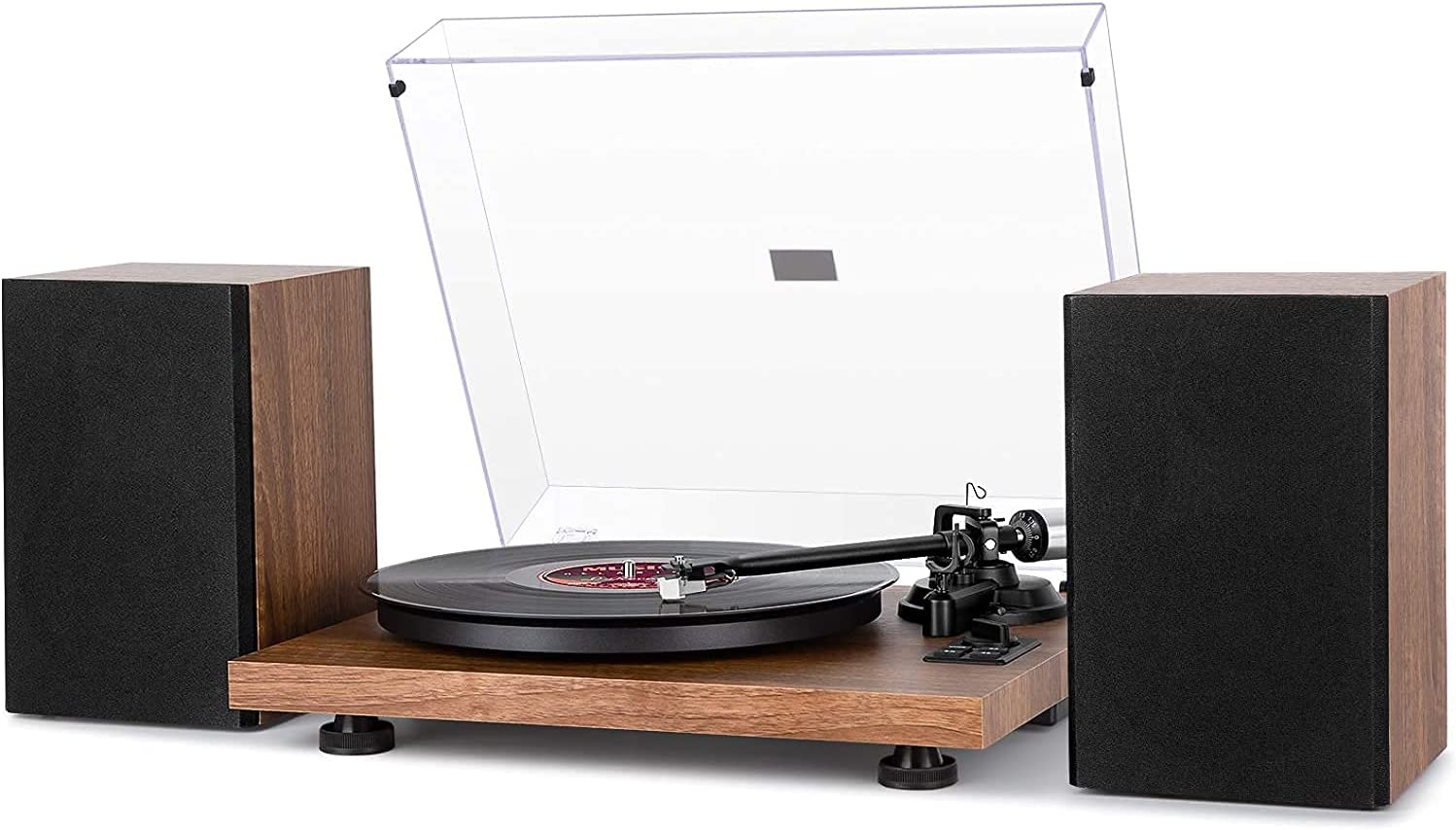
All-in-one and retro systems combine a turntable with speakers and often extra functions such as radio, Bluetooth, CD or cassette. They can be convenient and attractive, especially for casual use or small spaces. The compromise is that built-in speakers, compact cabinets and limited tonearm adjustment may restrict sound quality and upgrade potential.
If you own valuable records or expect your interest to grow, check the cartridge and stylus arrangement particularly carefully.
Budget and Upgrade Priorities
Set a whole-system budget rather than a turntable-only budget. If you already have good speakers and amplification, more of the money can go towards the deck and cartridge. If you are starting from nothing, balance the spend between the turntable, speakers and any required phono stage.
At the most affordable end, prioritise safe playback over extra features. A simple deck with a replaceable stylus and stable operation is a better buy than a feature-packed unit with poor tracking. For a first step into vinyl, a built-in phono stage can keep costs and boxes down.
In the middle of the market, look for better tonearms, improved cartridges, heavier or better-damped platters, cleaner speed control and stronger upgrade paths. This is where many listeners notice meaningful gains if their speakers are good enough to show them.
Higher-end turntables can reward careful setup and good partnering equipment, but they are not magic. A premium deck into weak speakers in a poor room may disappoint. Conversely, a modest turntable correctly set up through capable speakers can be very enjoyable.
If you are upgrading, identify the weak link before spending. If records sound dull, a worn stylus or poor speakers may be to blame. If you hear hum, the issue may be grounding or cable routing.
If the pitch wavers, speed stability may be the problem. Upgrading blindly often costs more than solving the actual fault.
Choosing for Different Buyers
For the first-time listener who wants simplicity, choose a deck with a built-in phono stage, clear setup instructions and either automatic operation or an easy cueing lever. Pair it with powered speakers if you do not want a separate amplifier. Bluetooth can be useful, but wired speakers usually avoid pairing frustration.
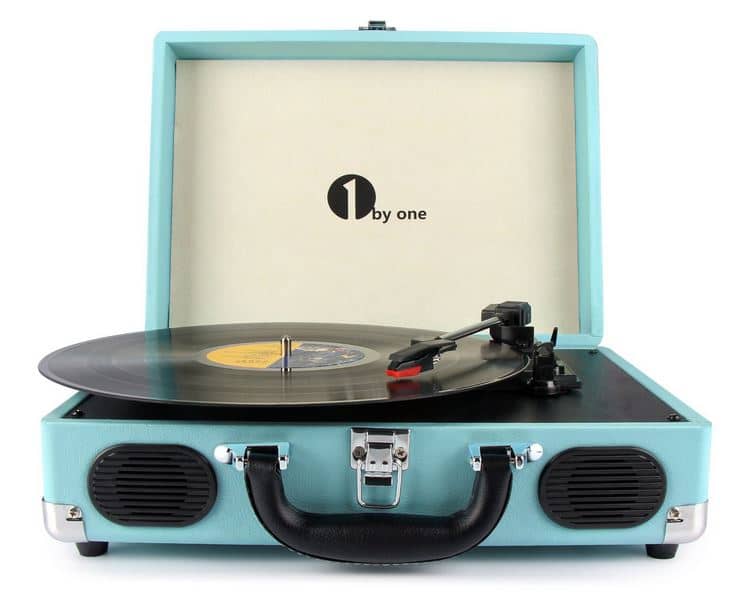
For the listener upgrading from a suitcase or all-in-one record player, focus on a separate turntable and external speakers. The move away from tiny built-in speakers is often a bigger improvement than chasing exotic specifications. Check that the new turntable has a proper cartridge system and a tonearm with sensible adjustment.
For the hi-fi listener, put sound quality, speed stability, arm quality and cartridge upgrade options ahead of convenience. Manual turntables from hi-fi-focused brands may make sense, provided you are comfortable with setup and have a suitable phono stage. Models such as the Rega Planar 1, Pro-Ject Primary E, Pro-Ject Debut Carbon EVO and Technics SL-100C sit in different parts of this broad hi-fi landscape, but should be compared on compatibility and setup needs rather than brand alone.
For the casual living-room user, an automatic or Bluetooth turntable may be more enjoyable than a purist deck that nobody else in the house wants to use. Ease of operation is a legitimate buying factor. The best turntable is not the most theoretically capable one if it puts you off playing records.
For collectors and anyone with valuable pressings, avoid designs with non-replaceable styli or limited tracking control. You want clean tracking, correct setup and careful handling. Spend on record cleaning basics and storage, not just hardware.
For digitising, choose USB because you genuinely need it, not because it sounds more modern. Also check the software workflow, file formats and whether you are willing to spend time splitting tracks and cleaning up recordings. Real-time recording means a 40-minute album takes at least 40 minutes to capture.
Common Mistakes
The most common mistake is buying a turntable without checking the input on the amplifier or speakers. If the output level is wrong, the result may be too quiet, distorted or unusable without another box.
Another mistake is assuming built-in speakers are enough for satisfying vinyl playback. They may be fine for casual listening, but the speaker size and cabinet design are usually limiting. If sound quality matters, separate speakers are usually a better route.
Do not choose by appearance alone. Retro styling can be appealing, but the tonearm, stylus, speed and connections matter more. A turntable is a precision playback device, not just furniture.
Avoid ignoring setup. Even a good turntable can sound poor if the tracking force is wrong, the platter is not level, the belt is fitted incorrectly, or the cartridge alignment is off. Follow the manual carefully and take your time.
Do not assume louder is better when comparing. A built-in phono stage or cartridge with higher output can sound more impressive at first because it plays louder. Match volume levels as closely as possible before judging.
Finally, do not keep playing records with a worn or damaged stylus. If the sound becomes fuzzy, distorted or harsh, stop and inspect the stylus. Replacing a stylus is far cheaper than damaging records.
Setup and Care Basics
Put the turntable on a level, stable surface. Use a small spirit level if necessary. Keep it away from speakers where possible, especially subwoofers or large floorstanders.
If the sound howls, booms or the stylus skips when the music gets loud, vibration may be feeding back into the deck.
Fit the belt, platter, mat and counterweight exactly as the instructions describe. If the turntable has adjustable tracking force, set it to the cartridge maker’s recommended range. Guessing is not a good idea.
If you are unsure, a simple tracking force gauge can help.
Keep records clean. A carbon fibre brush before playback removes surface dust, while proper wet cleaning may help used records. Store records upright, not leaning at a steep angle or stacked flat.
Use clean inner sleeves if old paper sleeves are shedding dust.
Handle records by the edges and label. Keep the stylus clean with an appropriate stylus brush or cleaner used according to the manufacturer’s instructions. Never scrub it sideways or use household products.
If you hear hum, check that the ground wire is connected if your turntable uses one. Keep audio cables away from mains adaptors where practical. Do not open equipment or attempt electrical repairs; if there is a fault with mains-powered gear, consult the retailer, manufacturer or a qualified technician.
Final Checklist
Before you buy, answer these questions:
What will the turntable connect to: amplifier, powered speakers, Bluetooth speaker, headphones or computer?
Do you need a built-in phono stage, or does your amplifier already have a phono input?
Do you want manual control, semi-automatic convenience or fully automatic operation?
Will you play only 33 and 45 rpm records, or do you genuinely need 78 rpm support with the correct stylus?
Is the stylus replaceable, and can the cartridge be upgraded if you want to improve later?
Does the turntable have adjustable tracking force and, ideally, anti-skate?
Is there space for the turntable on a stable, level surface away from vibration?
Have you left budget for speakers, a phono stage, cables, cleaning supplies or a replacement stylus if needed?
Are Bluetooth or USB essential to your use, or just nice extras?
If upgrading, have you identified the real weak point in your current system rather than assuming the turntable is the problem?
Frequently asked questions
Do I need an amplifier for a turntable?
Not always, but you need some form of amplification. Passive speakers require an amplifier. Powered speakers have amplification built in, but may still need the turntable to provide a line-level signal through a built-in phono stage.
Bluetooth speakers receive a wireless signal from a Bluetooth turntable, but sound quality will depend heavily on the speaker.
Is a belt drive or direct drive turntable better?
Neither is automatically better for every buyer. Belt drive designs use a rubber belt between motor and platter, which can help isolate motor vibration but may need belt replacement over time. Direct drive designs place the motor drive more directly at the platter and are valued for speed control and durability, especially in DJ use.
For home listening, overall design and setup matter more than the drive type alone.
Will a more expensive cartridge improve my turntable?
It can, but only if the turntable, tonearm and rest of the system are good enough to benefit. A cartridge must be compatible with the arm and correctly aligned. On some entry-level record players, the cartridge may not be upgradeable at all.
Before buying a new cartridge, check stylus wear, speaker quality and setup.
Are Bluetooth turntables bad for vinyl?
Bluetooth does not harm records. The concern is sound quality and reliability. The record is still played by a stylus, then the audio is converted for wireless transmission.
For convenience, that may be ideal. For the cleanest sound, a wired connection to a good amplifier or powered speakers is usually preferable.
Can a cheap record player damage records?
A poorly designed or badly set up player can increase record wear, especially if it has a low-quality stylus, excessive tracking force or poor tracking ability. Not every affordable turntable is unsafe, but you should look for a replaceable stylus, sensible tonearm design and correct setup instructions. If in doubt, avoid playing valuable records on very basic all-in-one units.
How often should I replace the stylus?
It depends on the stylus type, condition of your records, cleanliness and hours of use. Follow the cartridge maker’s guidance where available. Replace it sooner if you hear persistent distortion, sibilance, mistracking or dullness that is not present on other equipment.
Keeping records and the stylus clean helps extend useful life.
Is USB recording worth having?
It is worth having if you plan to digitise records. It is less important if you only want to listen through speakers. Recording vinyl takes time and some patience, because albums are captured in real time and may need track splitting and level adjustment afterwards.
Do not pay extra for USB unless you will use it.
Should I buy a turntable with speakers included?
A bundled system can be convenient and may suit a beginner who wants everything in one purchase. The trade-off is that included speakers are not always the strongest part of the package. If you care about sound quality, compare the turntable and speakers separately where possible, and make sure the system can be upgraded later.
Final recommendation
The right turntable is the one that fits your records, room, speakers and listening habits. Start with compatibility, then focus on safe, stable playback: a replaceable stylus, suitable tonearm, reliable speed and the right output for your system. Treat Bluetooth, USB and automatic operation as conveniences to choose deliberately, not features you must have.
If you are new to vinyl, keep the setup simple and leave room in the budget for decent speakers and basic record care. If you are upgrading, work out what is actually limiting your current sound before spending. A carefully chosen, properly set up turntable will give you more value than a more expensive model bought for the wrong reasons.