Introduction
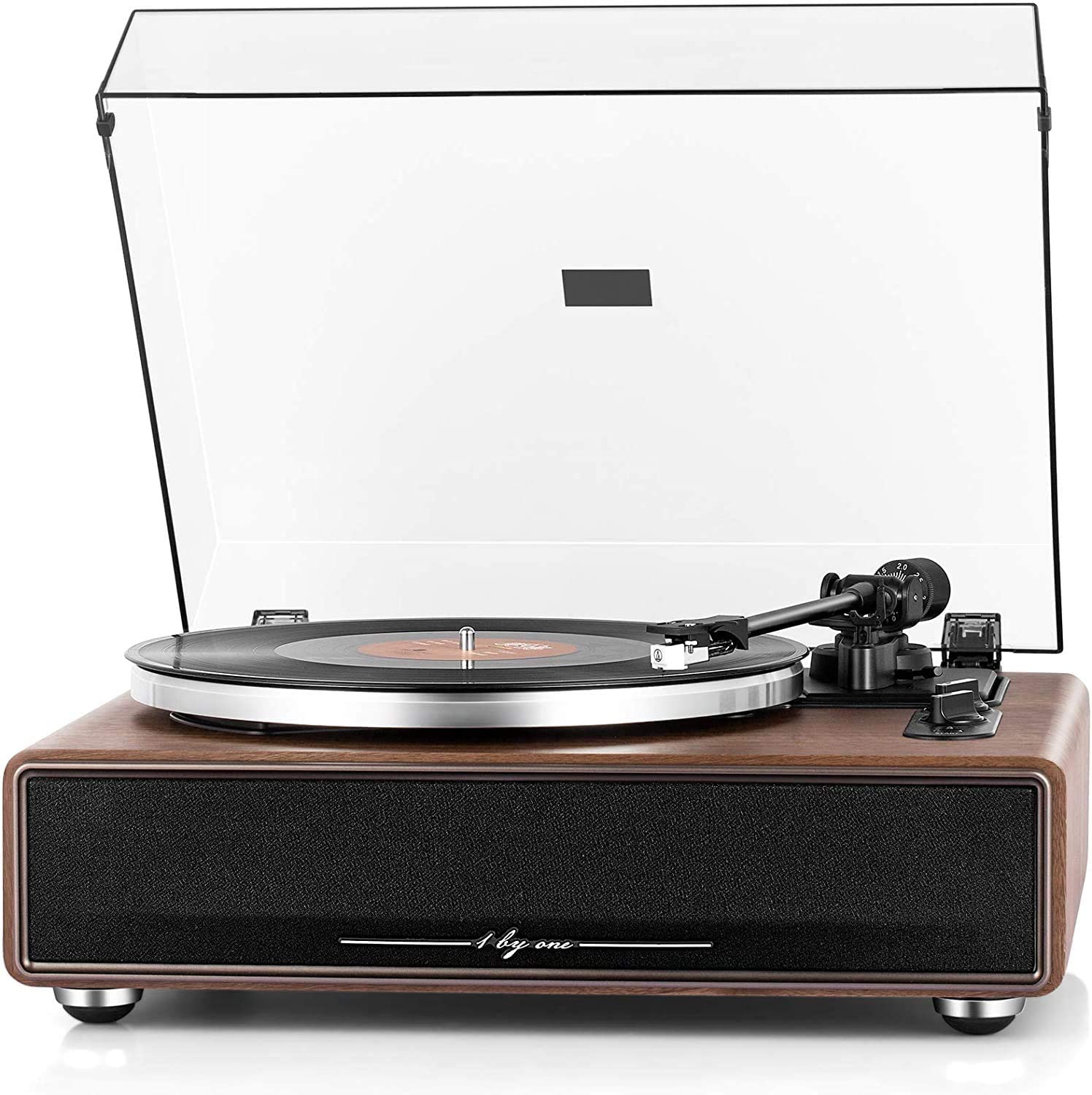
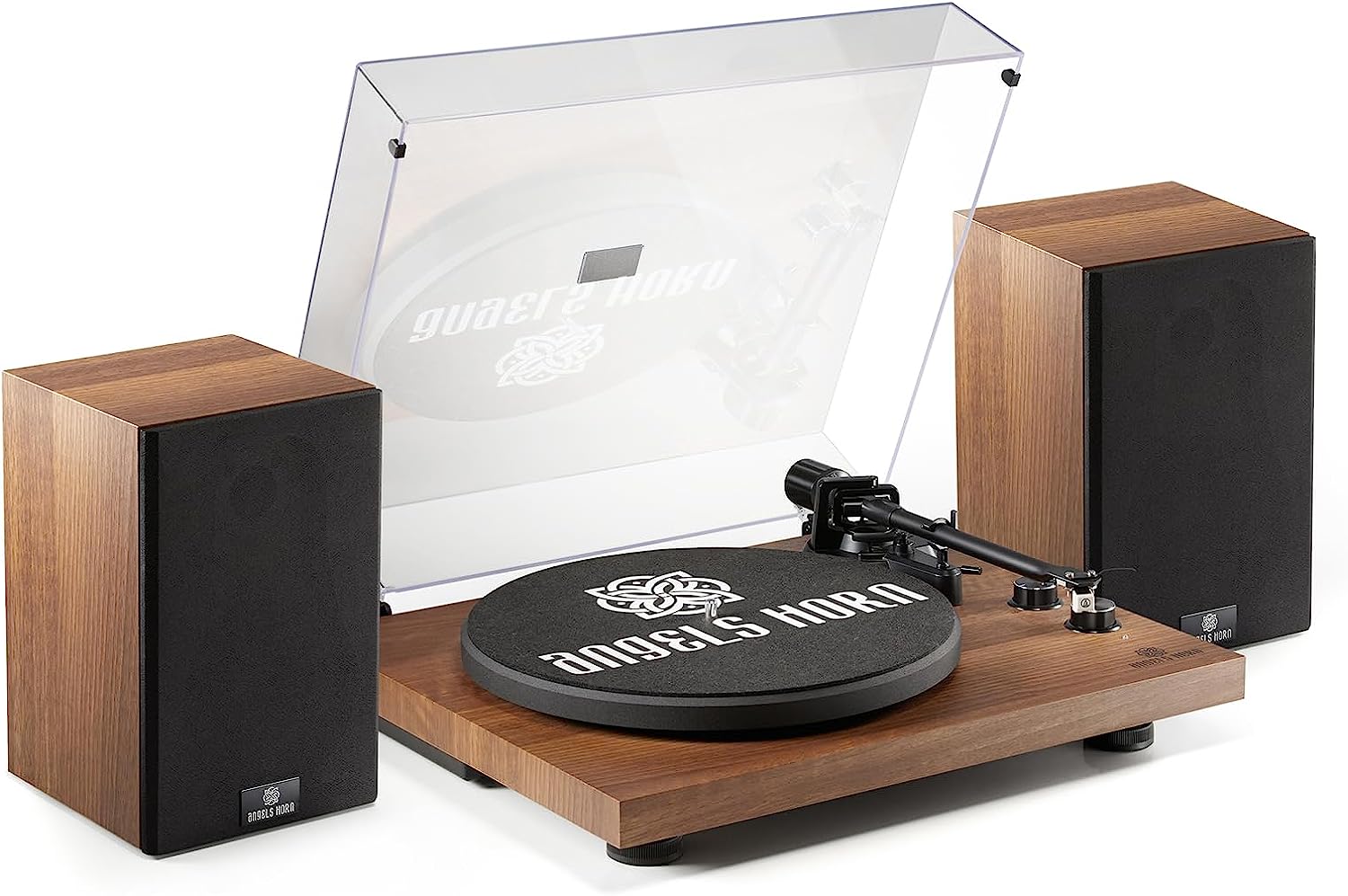
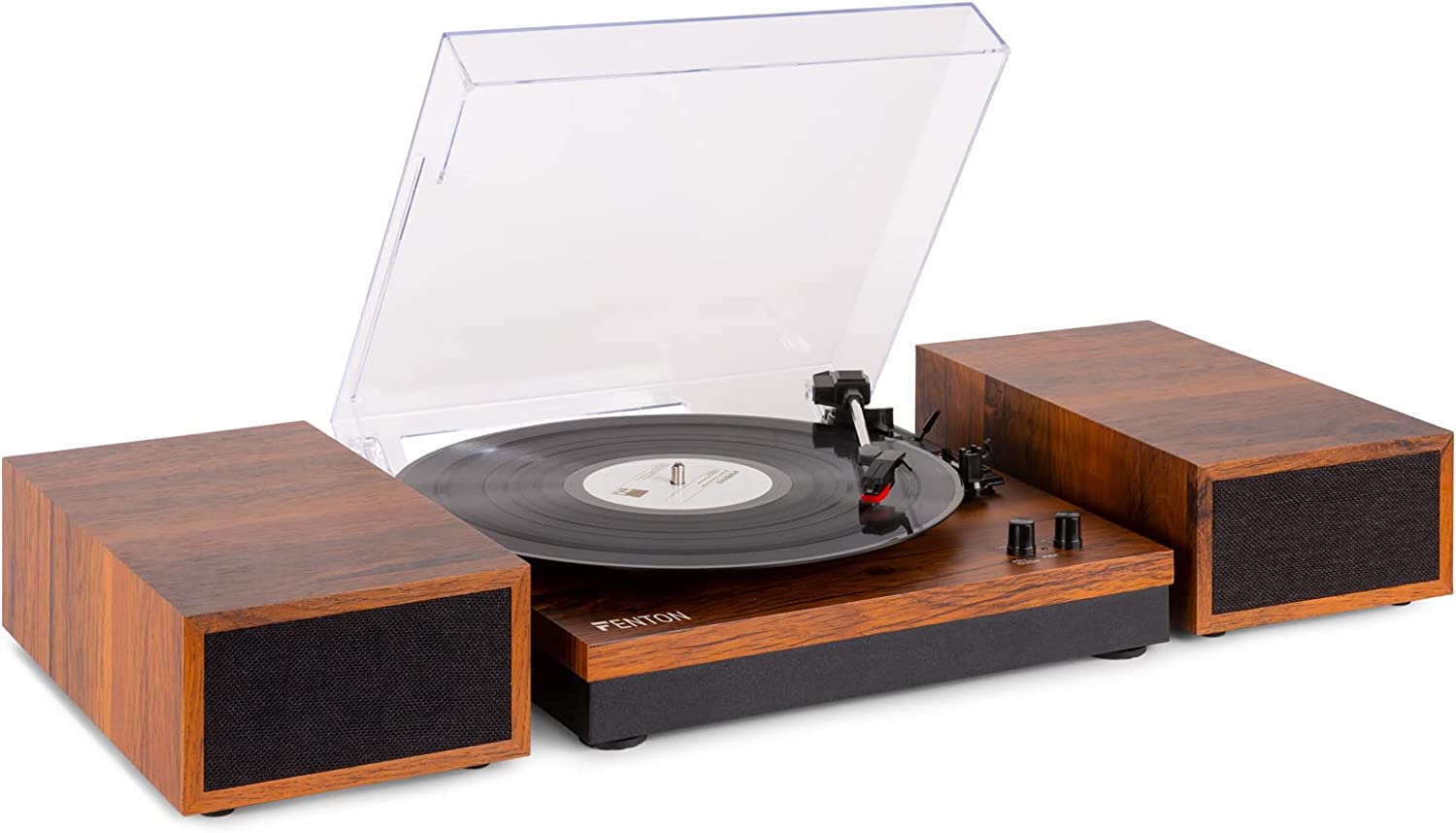
Fenton Bluetooth Record Player with Built-In Speakers is a low-cost, retro-styled record player package aimed at people who want a simple way into vinyl without building a separate hi-fi system.
Watch the product video
Despite the common retail wording, the supported product evidence describes it as the Fenton RP165 Record Player Set Wood, with a built-in stereo amplifier and two included matching speakers rather than a single unit with speakers hidden inside the plinth.
It is best suited to casual listening in a bedroom, kitchen or living room, especially for buyers who value appearance, convenience and Bluetooth input over hi-fi upgrade potential.
Design and build
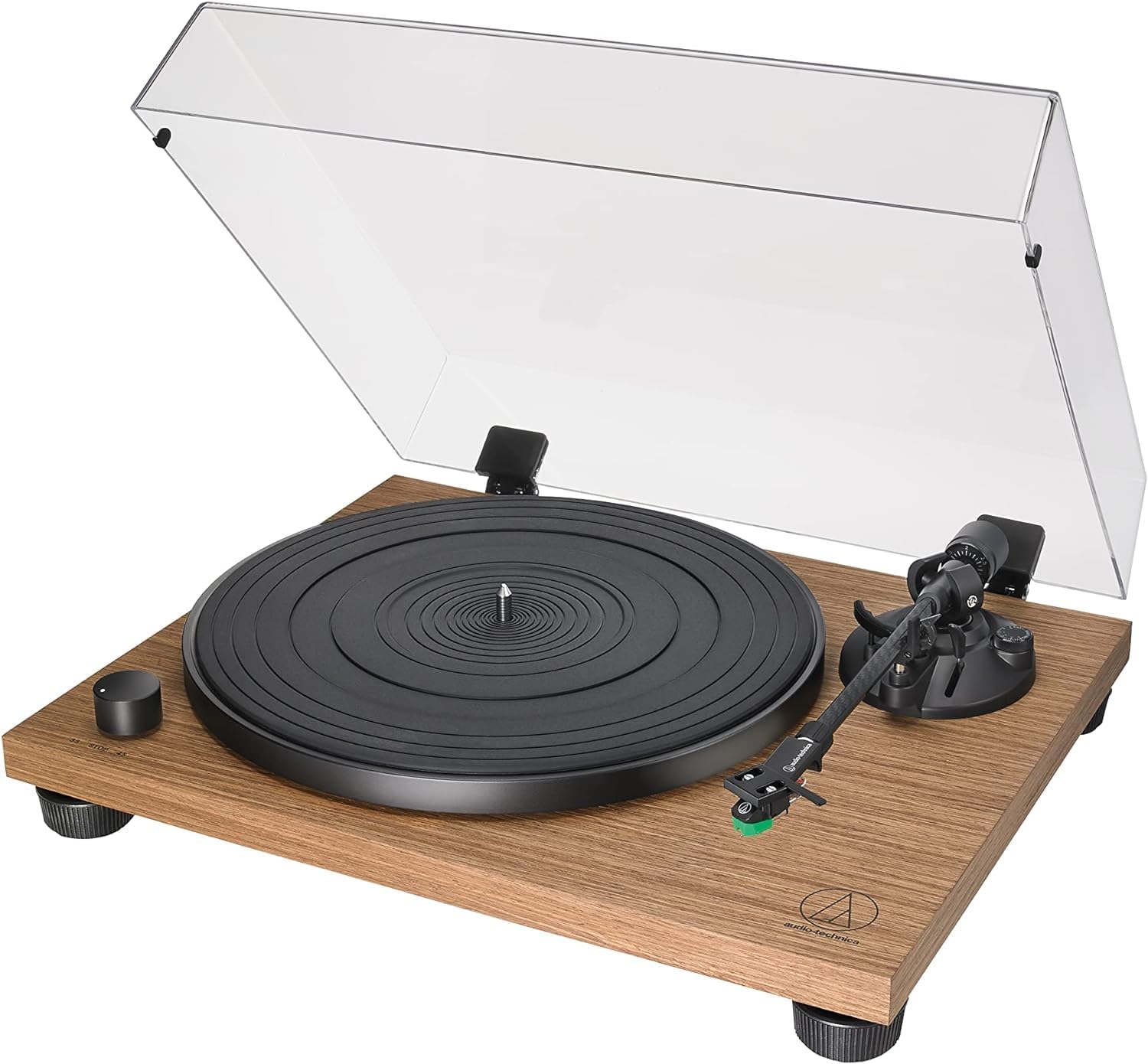
The RP165 has a decorative wood-effect presentation that is intended to look at home on furniture rather than resemble a technical hi-fi component. The main unit houses the belt-driven record player mechanism, amplifier and basic controls, while the supplied speakers form a matching stereo set.
Controls are straightforward, with speed selection for 33⅓, 45 and 78 RPM, a volume control, a Bluetooth/phono function selector, a tonearm lift lever and an auto-stop switch. There is also an RCA output for connection to suitable external equipment.
Build and adjustment are clearly convenience-led. The evidence supports a fixed, entry-level tonearm arrangement with no documented counterweight, anti-skate control or cartridge alignment adjustment, so it should not be judged against more serious component turntables.
Features
The main attraction is that the Fenton arrives as a ready-to-use starter system. Its built-in amplifier and two supplied full-range stereo speakers mean basic vinyl playback does not require a separate amplifier, phono stage or speaker research.
Bluetooth is included as an input, allowing music from a phone, tablet or other Bluetooth source to play through the system. It is important to note that this is receiver-only Bluetooth, so it does not send record playback to wireless headphones or Bluetooth speakers.
The three-speed selector covers LPs, singles and 78 RPM playback, and the unit supports 7-inch, 10-inch and 12-inch records. However, no dedicated 78 stylus specification is supported by the supplied evidence, so valuable shellac records should be treated with caution.
An RCA line output gives the RP165 a useful escape route if the supplied speakers prove too limited. Better powered speakers or a suitable amplifier may improve the overall presentation, though the ceramic cartridge and basic tonearm remain part of the system’s character.
Setup
Setup should be manageable for a first-time buyer. Connect the speakers as directed, plug in the 12 V power adapter, place the record on the platter, select the correct speed, remove the stylus guard, release the tonearm clip and lower the stylus with the cueing lever.
For Bluetooth use, select BT mode and pair a phone or tablet with the player. This makes the system useful as a small everyday speaker set, but it should not be confused with wireless vinyl transmission.
Practical placement still matters. The unit should be kept away from damp spaces and vibration, and buyers should retain the stylus cover for storage and transport.
Performance
Day-to-day operation is manual and simple. The user selects the speed, sets the function to phono, releases the tonearm, positions it over the record and lowers it with the lift lever.
The belt-drive mechanism is typical for this type of domestic record player, but no supported figures are available for speed accuracy, wow and flutter, rumble or signal-to-noise ratio. For that reason, it is safest to view the RP165 as an occasional-use player rather than a precision deck.
The auto-stop switch can stop the platter at the end of a side, which may reduce unnecessary stylus wear. The manual evidence also notes that auto-stop behaviour can vary with some records, so it may occasionally need to be switched off.
Connectivity is useful but limited. RCA output is welcome, while the absence of verified USB recording, headphone output and Bluetooth transmission makes the feature set more basic than some buyers may expect from a modern record player listing.
Sound quality
No independent listening test evidence is available for this exact model, so sound quality should be assessed from the supported design and user-feedback themes. The ceramic stereo cartridge, compact mechanism and small supplied full-range speakers point towards casual playback rather than high-fidelity performance.
The likely strengths are simplicity, a warm easy-going character and enough output for modest rooms. Owner feedback commonly treats the sound as acceptable for casual use, especially given the all-in-one nature of the set.
The main limitations are also clear. The supplied speakers are a recurring weak point in feedback, with comments around limited bass, modest clarity and a lighter presentation than a proper powered-speaker setup.
Using the RCA output with better external speakers or amplification may help scale and tonal balance. Even then, the fixed tonearm and ceramic cartridge mean it is not a platform for serious cartridge upgrades or detailed vinyl replay.
Pros
- Ready-to-use package with built-in amplifier and two supplied stereo speakers
- Attractive retro wood styling for décor-led rooms
- Bluetooth input for playing music from a phone or tablet Plays 33⅓, 45 and 78 RPM records RCA output allows connection to suitable external speakers or amplification Simple manual controls are approachable for beginners
Cons
- Bluetooth is input-only and cannot transmit vinyl to wireless headphones or speakers
- No documented adjustable tracking force, anti-skate or cartridge alignment
- Ceramic cartridge limits fidelity and upgrade flexibility Supplied speakers are convenient but likely to be bass-limited
- No verified USB recording, headphone socket or fully automatic tonearm operation Claimed 100 W output lacks RMS and test-condition detail
Verdict
The Fenton Bluetooth Record Player with Built-In Speakers is best judged as a convenient starter set, not a serious hi-fi turntable. Its appeal lies in the retro styling, included speakers, simple controls and Bluetooth input.
Its compromises are equally important. The ceramic cartridge, limited tonearm adjustment, modest speaker expectations and receiver-only Bluetooth make it a poor fit for demanding listeners or valuable record collections.
Buy it if you want an affordable, decorative and easy vinyl package for light use. If sound quality and record care are the priority, it is worth saving for a better entry-level turntable and separate powered speakers.