Introduction
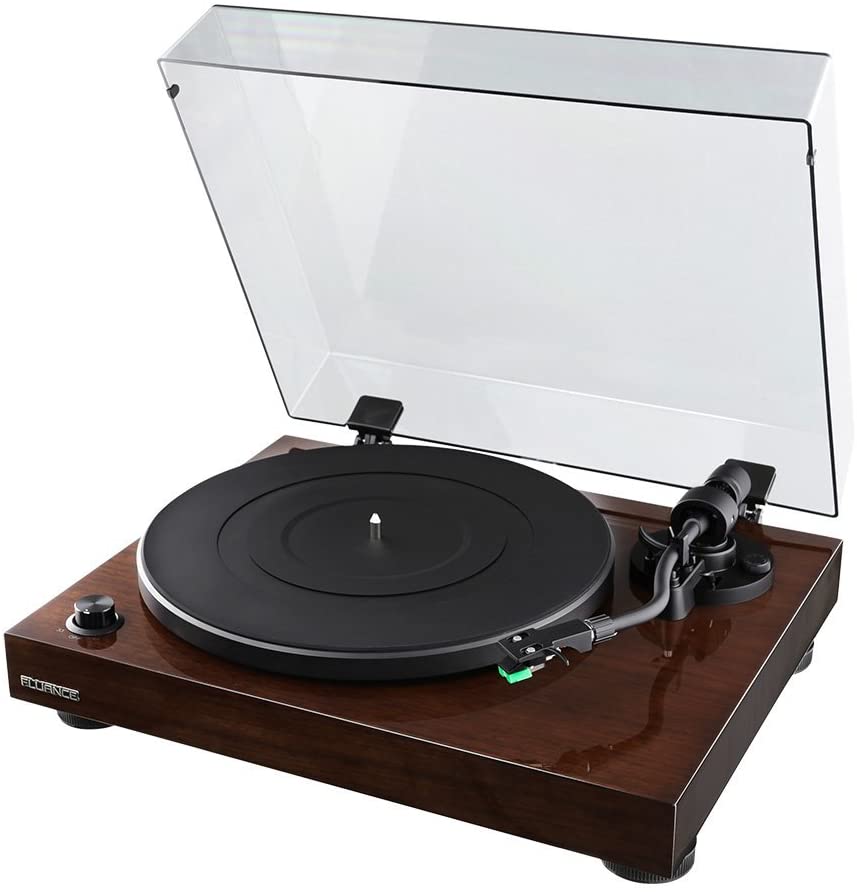
The Fluance RT81 Record Player is a belt-drive manual turntable with a built-in switchable phono preamp, an Audio-Technica AT95E cartridge and a traditional hi-fi layout. It suits buyers moving beyond suitcase-style record players who want proper tonearm adjustment without immediately adding a separate phono stage.
Watch the product video
Within Fluance’s range, the RT81 sits as a convenient entry-level model rather than a performance-focused end point. It is best understood as an attractive, upgradeable starter deck for powered speakers or a standard amplifier input, especially for listeners who value ease of connection and a classic appearance.
Design and build
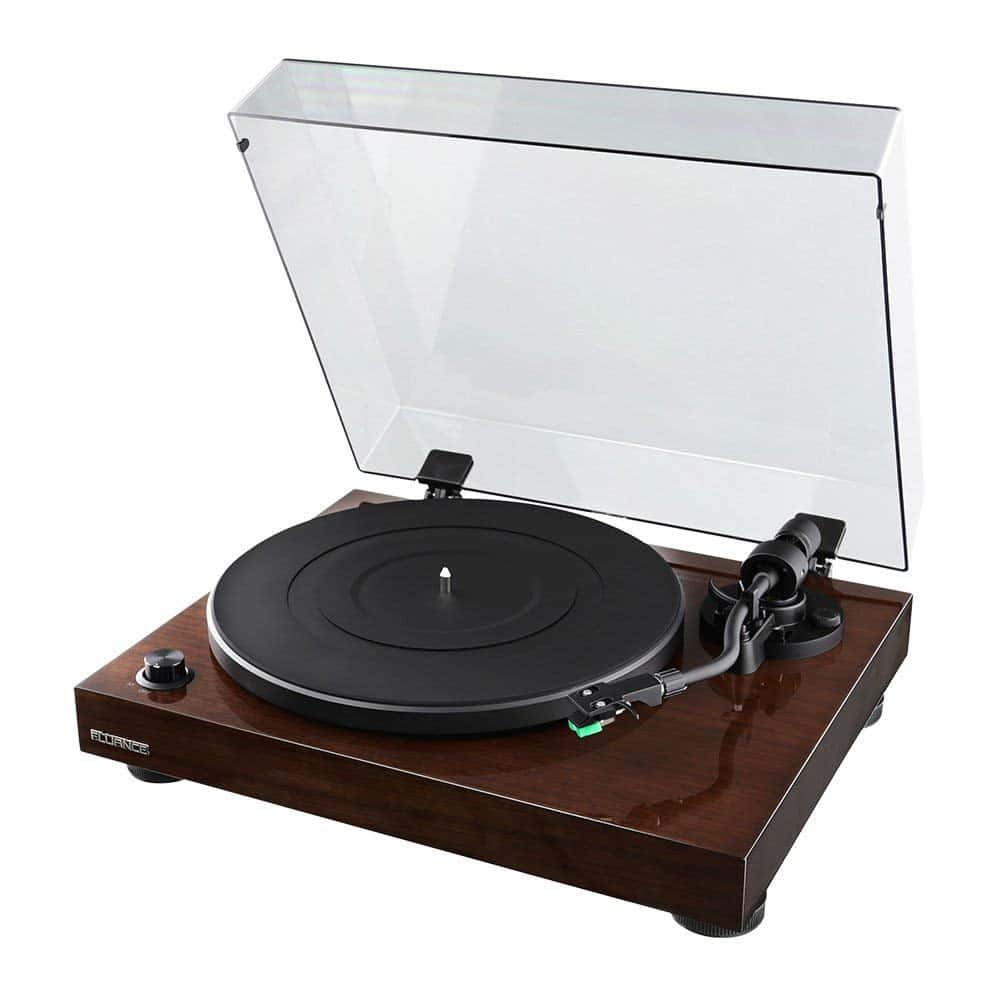
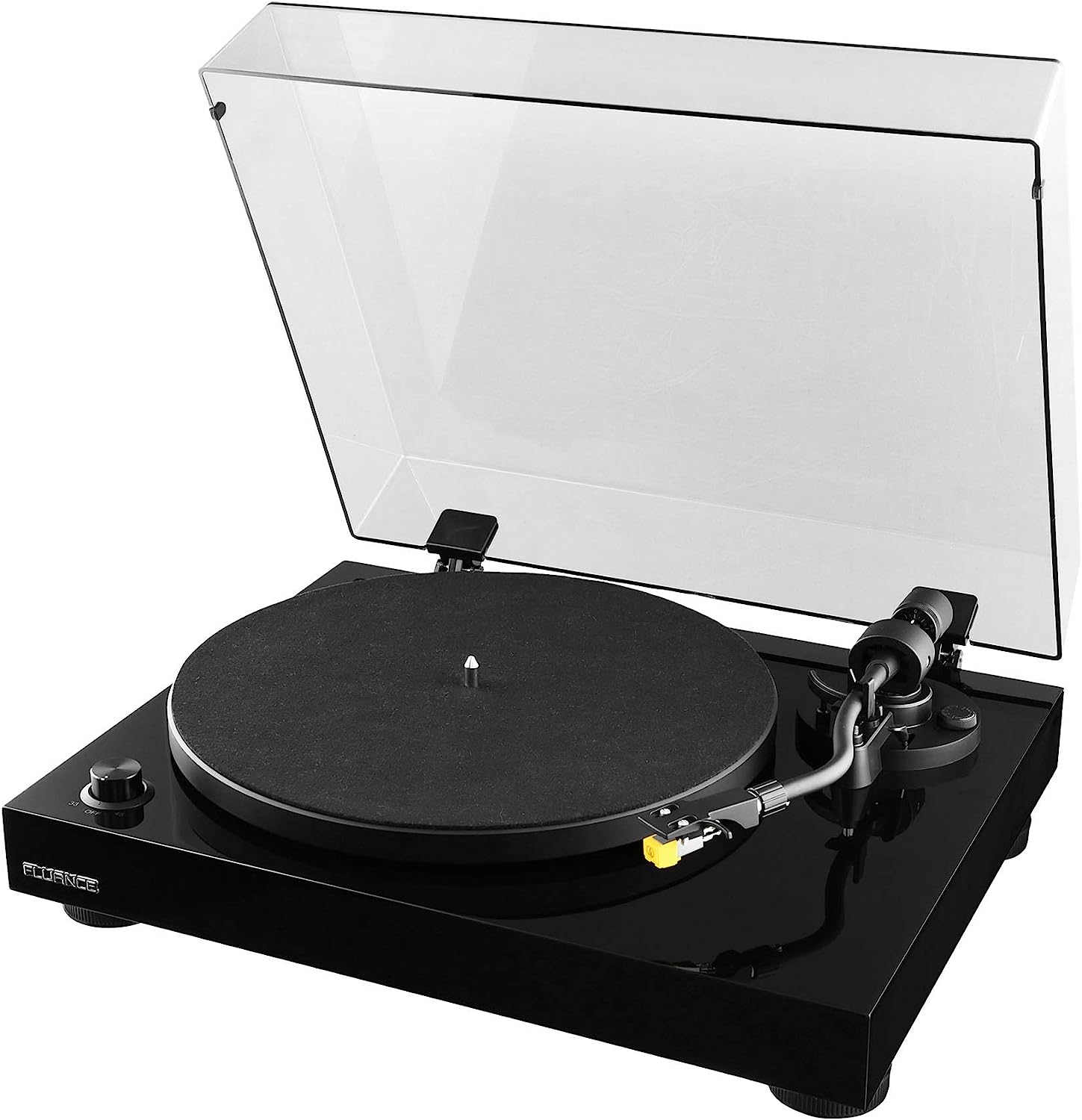
The RT81 uses an MDF plinth with a high-gloss walnut real wood veneer finish on the current listed version, giving it a more furniture-friendly look than many plain plastic starter decks. A tinted dust cover, aluminium platter and rubber mat complete the traditional presentation.
Its aluminium S-shaped tonearm is static-balanced and includes an adjustable counterweight, adjustable anti-skating and a cueing lever. The detachable H-4 bayonet headshell is useful for cartridge replacement or future upgrades, provided the cartridge weight remains within Fluance’s stated range.
Construction is aimed at reducing unwanted vibration through the MDF cabinet, isolation feet, rubber mat and belt-drive layout. It still needs a stable, level surface, as with any manual turntable, particularly if it is placed near speakers or in a room with footfall issues.
Features
The most practical feature is the built-in switchable phono preamp. In LINE mode, the RT81 can connect directly to powered speakers or a normal line-level input; in PHONO mode, it can feed an external phono stage or an amplifier with a phono input.
Fluance supplies the RT81 with an Audio-Technica AT95E dual moving-magnet cartridge. This uses a bonded elliptical stylus and gives buyers a credible entry-level hi-fi cartridge rather than the very basic ceramic cartridges found on many all-in-one players.
The adjustable tonearm, counterweight and anti-skating control matter because correct tracking force and skating compensation help playback reliability and reduce the risk of avoidable record or stylus wear. The detachable headshell also makes cartridge changes less awkward than on many fixed-cartridge budget designs.
Auto-stop is included, but it should not be confused with full automation. You still place and cue the tonearm yourself, while the platter can stop after the end of a side when the feature is enabled.
Setup
Setup is more involved than a fully automatic plug-and-play player, but it is normal for a manual hi-fi turntable. The user needs to fit the platter and belt, attach the headshell, balance the tonearm, set the tracking force to 2.0 g, adjust anti-skating and choose the correct LINE or PHONO output setting.
Daily use is straightforward once those steps are complete. The cueing lever helps lower the stylus safely, and the auto-stop feature can be left on if the user wants the platter to stop after a side, though its behaviour can vary with some records.
Grounding depends on how the RT81 is connected. Fluance states the ground wire is not required when using the internal preamp, but it should be used when connecting through an external phono preamp or phono input.
Performance
In day-to-day use, the RT81 is designed to be more hands-on than an automatic record player. You select the speed, cue the arm and handle the record change, while the auto-stop function can reduce unnecessary running at the end of a side.
Official specifications list 33 1/3 and 45 RPM playback only, so this is not suitable for 78 RPM records. There is no USB output and no built-in Bluetooth or Wi-Fi transmitter, which keeps the RT81 focused on standard analogue RCA connection.
Speed performance is a key area to view realistically. The published speed variation and wow-and-flutter figures are modest compared with servo-controlled rivals and Fluance’s RT82 and higher models, so buyers prioritising pitch stability should consider that before choosing the RT81.
Connectivity is one of its strengths for beginners. The switchable preamp means it can start simply with powered speakers, then later be used with an external phono preamp if the rest of the system improves.
Sound quality
Based on its cartridge, adjustable tonearm and conventional hi-fi layout, the RT81 should offer a more composed and substantial presentation than many all-in-one record players. The AT95E cartridge and moving-magnet output give it a sensible foundation for entry-level vinyl playback.
Professional coverage of the AT95E-equipped RT81 has generally described it as solid, weighty and musically approachable for a starter deck. That said, it should not be treated as a high-end turntable, and some alternatives can offer stronger detail retrieval, dynamic expression or speed consistency.
The internal phono stage is a useful convenience and helps keep the system simple. Buyers using more revealing speakers or amplifiers may eventually prefer to bypass it with an external phono preamp, but it is a practical inclusion for first-time setups.
Pros
- Built-in switchable phono preamp works with powered speakers or external phono stages Supplied Audio-Technica AT95E moving-magnet cartridge is a credible starter choice Adjustable counterweight and anti-skating support proper setup Detachable headshell gives a practical cartridge upgrade path MDF plinth, aluminium platter and walnut finish provide a more substantial feel than very basic record players Switchable auto-stop adds convenience without making operation complicated
Cons
- No 78 RPM playback Not fully automatic
- the tonearm must be cued manually
- No USB output or built-in Bluetooth/Wi-Fi Speed variation and wow-and-flutter specifications are modest beside servo-controlled rivals Tonearm setup must be done correctly to avoid mistracking or distortion
Verdict
The Fluance RT81 Record Player is a sensible entry-level hi-fi turntable for buyers who want proper manual setup, attractive styling and easy connection to powered speakers. Its built-in switchable phono preamp, AT95E cartridge and detachable headshell make it more flexible than many very basic record players.
Its main compromises are not hidden: it is not fully automatic, it has no 78 RPM, USB or built-in wireless features, and its speed-control specification is not as strong as servo-controlled alternatives. Those points matter most for users seeking maximum pitch stability or a more performance-led upgrade path.
For a first serious vinyl setup, the RT81 remains a practical and appealing option. If the price difference is small and an external phono stage is acceptable, the Fluance RT82 is the more performance-focused step up; otherwise, the RT81’s convenience is its strongest argument.