Introduction
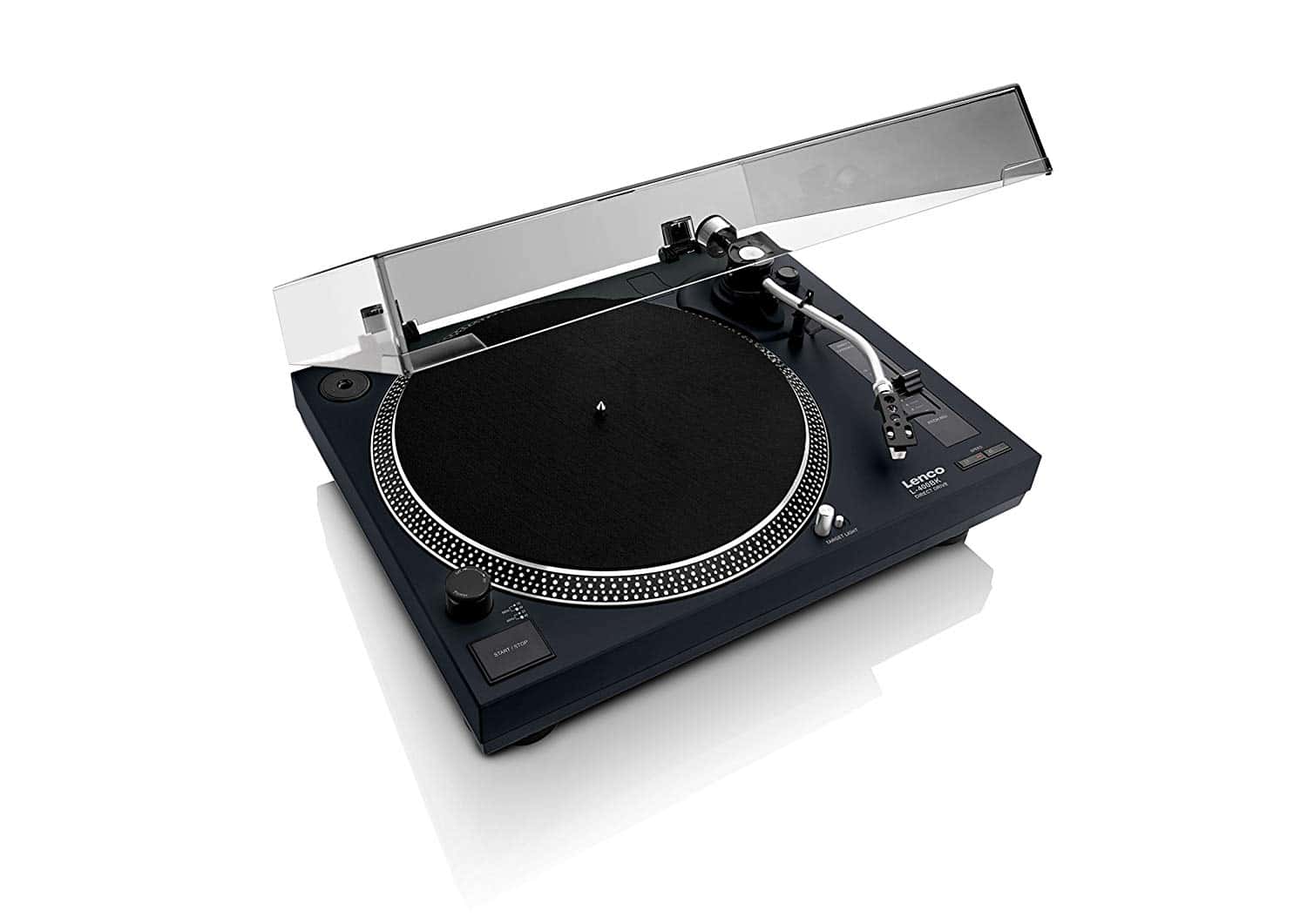
The Lenco L-400 Black USB Vinyl Turntable is a manual direct-drive record player with USB recording, a switchable phono stage and adjustable tonearm controls. It is aimed at home listeners who want more control than a very basic plug-and-play deck, but who still value straightforward connectivity.
Watch the product video
This is best viewed as a value-oriented USB turntable rather than a professional DJ deck or high-end audiophile model. The L-400BK designation is useful here because it distinguishes this black model from nearby Lenco direct-drive models such as the L-3808 and L-3828, which should not be assumed to share every specification.
Design and build
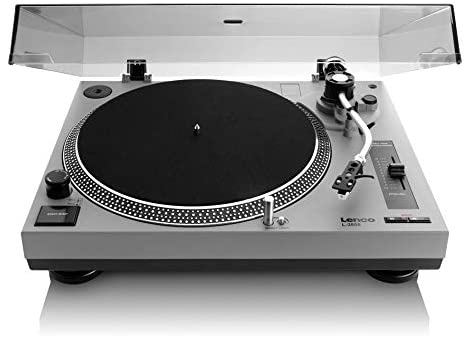
The L-400BK follows a familiar DJ-inspired layout, with a black plinth, large start/stop button, rotary power switch with strobe light, 33/45 speed buttons and a pitch slider. The aluminium platter, detachable headshell and mechanical cueing give it the appearance and handling of a more adjustable turntable than an entry-level automatic record player.
Construction is practical rather than luxurious. Evidence points to a lightweight moulded or plastic plinth and a relatively light platter, so it should not be expected to provide the same isolation or solidity as heavier turntables.
A dust cover and rubber feet add useful day-to-day protection and basic vibration control. Even so, placement matters: this type of lightweight deck benefits from a rigid, level support away from speakers and obvious sources of vibration.
Features
The headline feature is direct drive, meaning the motor drives the platter without a belt. That helps with quick start-up, electronic braking and the DJ-style feel, while avoiding belt replacement as a maintenance point.
USB recording is built in for connection to a computer, with the manual specifying 16-bit operation at 44.1 kHz or 48 kHz. This is useful for occasional archiving of records, but it should be treated as a convenient basic transfer function rather than a high-resolution recording system.
The switchable phono/line output makes the Lenco flexible with different systems. It can feed a line or aux input via its built-in phono pre-amplifier, or be switched to phono output for use with an external phono stage or an amplifier’s phono input.
The supplied Audio-Technica AT3600 moving-magnet cartridge, adjustable counterweight, anti-skate control and detachable headshell give it more upgrade and setup scope than many simpler USB turntables. The pitch slider and strobe markings are also useful for checking and adjusting speed, though the product is not presented as suitable for professional use.
Setup
Some assembly is required before use. The platter, slipmat, headshell and counterweight need fitting, then the tonearm should be balanced and tracking force and anti-skate set for the installed cartridge.
For the supplied cartridge, the manual evidence notes a recommended stylus pressure of 2 g, but users should still verify the fitted cartridge and stylus before adjustment, especially on a used or discounted example. Careful setup is worthwhile because this is not a fixed-arm record player.
Connection is simple once the output switch is understood. Use phono mode into a phono input, line mode into an aux/line input or powered speakers, and USB into a computer recording application set to the USB audio device.
Performance
In everyday use, the L-400BK is a fully manual turntable. You select the speed, press start, cue the arm onto the record and lift it again at the end of the side, as there is no automatic return or auto-stop.
The direct-drive system supports fast start and braking, and the specifications include 33 1/3 and 45 rpm operation with +/-10% pitch adjustment. Manual evidence also gives less than one second for starting, braking and speed-change time, which suits users who like responsive controls.
Professional review evidence was broadly positive about the value and speed behaviour, but also noted some direct-drive cogging or flutter. That means expectations should stay realistic: this is a capable home direct-drive deck, not a precision broadcast or club-standard unit.
Connectivity is one of its stronger practical points. The RCA output can be used in phono or line mode, while USB lets a computer record from the turntable without a separate USB audio interface.
Sound quality
Based on the supported design and cartridge information, the L-400BK should offer a stable, enjoyable and reasonably full presentation when correctly set up. The AT3600 cartridge is a common budget moving-magnet design and is more about accessible, forgiving playback than extracting the last layer of detail.
The adjustable arm is important because tracking force and anti-skate can be set properly, helping both sound quality and record care. Poor setup, a worn stylus or an unstable support would undermine what the deck can do.
The built-in phono stage adds convenience, but buyers seeking the best analogue performance may want to compare it with an external phono preamp. Similarly, the USB output is useful for basic archiving, yet its 16-bit specification and reported modest digital quality mean it is not the main reason to buy if transfer quality is the priority.
Pros
- Direct-drive motor with quick start and braking USB recording for basic vinyl archiving to a computer Switchable phono/line output for flexible system matching Adjustable counterweight and anti-skate for proper tonearm setup Detachable headshell supports easier cartridge changes Supplied Audio-Technica AT3600 moving-magnet cartridge Pitch control and strobe markings add useful speed adjustment
Cons
- Fully manual operation with no auto-stop or arm return Lightweight plinth and platter limit isolation and refinement USB recording is limited to 16-bit 44.1/48 kHz operation
- No supported evidence for built-in speakers
- Bluetooth or Wi-Fi Only 33 1/3 and 45 rpm playback
- no 78 rpm support Discontinued status may affect availability, condition and support value
Verdict
The Lenco L-400 Black USB Vinyl Turntable is a practical, feature-rich manual deck for buyers who want direct drive, USB recording and adjustable setup without moving into more expensive specialist territory. Its strengths are flexibility, upgrade scope and useful analogue and digital outputs.
Its limitations are equally clear. The lightweight construction, fully manual operation and basic USB recording quality mean it is not the right choice for buyers wanting automatic convenience, professional DJ durability or a more refined hi-fi platform.
As a used, clearance or attractively priced buy, it remains a sensible option if complete and working properly. If priced close to newer direct-drive USB alternatives with current support and warranty cover, those newer models may be the safer purchase.