Introduction
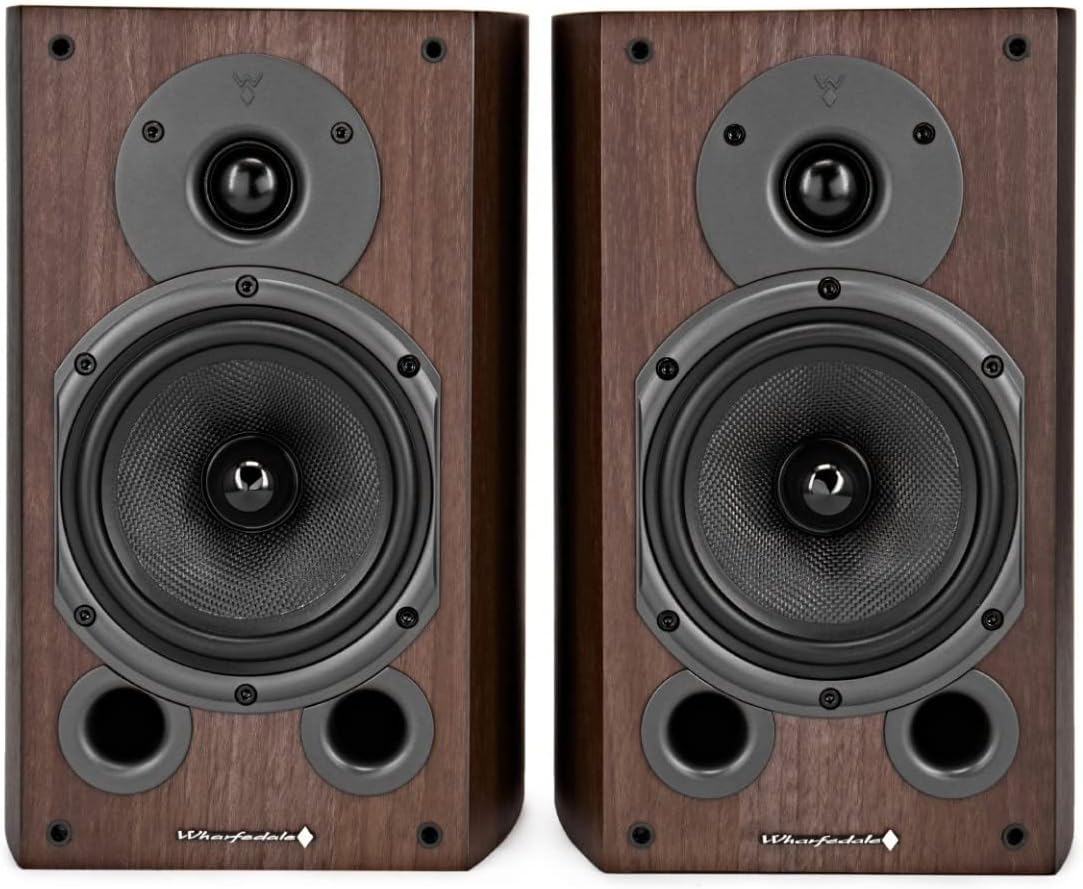
Wharfedale Diamond 9.1 Speakers are compact passive bookshelf speakers for use with a separate amplifier. They suit budget vinyl systems, small living rooms, bedrooms and office setups where space and value matter.
Watch the product video
This is not a record player, powered speaker or Bluetooth system. The Diamond 9.1 is a conventional stereo speaker pair intended to be partnered with suitable hi-fi electronics, including a phono stage somewhere in the chain for turntable use.
Its appeal is its long-standing reputation as an affordable, smooth and musical standmount speaker. Buyers wanting a simple plug-and-play turntable speaker should look at active alternatives, but those building a first passive hi-fi system may find the 9.1 a sensible starting point.
Design and build
The Diamond 9.1 is a two-way standmount design with a soft-dome textile tweeter and a Kevlar mid/bass driver. Its curved, internally braced cabinet is a notable part of the design, intended to reduce unwanted vibration and internal reflections compared with a plain square enclosure.
The cabinet is reflex-loaded, with current retail information describing twin front reflex ports. That can make placement a little more forgiving than some rear-ported designs, although wall distance still affects bass weight and clarity.
There are no onboard controls, displays or source inputs because these are passive speakers. Around the back, the bi-wireable binding posts allow normal single-wired connection with the terminal links in place, or optional bi-wiring for users who want to experiment.
Removable grilles are part of the practical package and help protect the drivers from dust, children and pets. The vinyl-style finish and compact dimensions are appropriate for the price level, though buyers expecting premium real-wood cabinetry may find the presentation more functional than luxurious.
Features
The most important feature is the passive hi-fi format. Each speaker needs power from a stereo amplifier, AV receiver or compact hi-fi receiver, and a turntable also needs a phono preamp unless that is already built into the turntable or amplifier.
The two-way driver arrangement gives treble duties to the 25 mm soft-dome tweeter and midrange/bass duties to the Kevlar main driver. In practical terms, this makes the Diamond 9.1 a proper hi-fi loudspeaker rather than a simple record-player accessory.
Published specifications commonly list 6-ohm nominal impedance, 86 dB sensitivity and recommended amplifier power of 20–100 W. The modest sensitivity means amplifier headroom is worth considering, especially in larger rooms or if you listen loudly.
Bi-wireable terminals add flexibility, but they are not essential for good results. Most buyers should begin with standard speaker cable, ensure the metal terminal links are fitted, and focus first on placement and amplifier matching.
Setup
Setup is straightforward if you already understand passive speakers. Connect the amplifier’s left and right speaker outputs to the matching terminals, keep red-to-red and black-to-black polarity consistent, and leave the metal links in place for normal single-wired use.
For vinyl, make sure the turntable signal is routed through a phono stage before it reaches the amplifier’s line-level input. This phono stage may be inside the turntable, inside the amplifier, or supplied as a separate box.
Stands are strongly recommended for best results, ideally putting the tweeters close to seated ear height. A rigid shelf can work, but the speakers should not be pushed deep into a bookcase; bring them forward, try slight toe-in and adjust wall distance to balance bass fullness against definition.
Performance
Day-to-day performance depends heavily on the amplifier, room and positioning. The Diamond 9.1 is best suited to small and medium spaces at sensible listening levels rather than large rooms, parties or very high-output use.
Turntable-specific issues such as speed stability, automation and cartridge tracking do not apply to these speakers. Their role is to reproduce the amplified signal they receive, so vinyl performance will also depend on the record player, cartridge, phono stage and amplifier upstream.
Connectivity is deliberately simple: speaker cable from an amplifier to the binding posts. There is no Bluetooth, USB, HDMI, optical input, DAC, phono stage, remote control or volume knob built in.
For home cinema, the Diamond 9.1 can be used as front or surround speakers with a suitable AV receiver. If a subwoofer is present, setting them to ‘Small’ is the more realistic approach because their compact cabinet is not designed for deep cinema bass on its own.
Sound quality
Available evidence points to a smooth, balanced and slightly warm-leaning presentation rather than a bright or aggressive one. That character is useful for many budget vinyl systems, where a forgiving treble and clear midrange can make long listening sessions easier.
The Diamond 9.1 has been widely praised for value, vocal clarity and an easy-going musical balance. Published professional commentary has also noted good detail and imaging for the size, while recognising that ultimate dynamics and scale are limited by the compact cabinet.
Bass should be understood in context. The reflex design helps a small speaker sound fuller, but it will not produce the low-frequency depth or room-filling authority of larger bookshelf speakers, floorstanders or a speaker-and-subwoofer system.
Placement can alter the tonal balance noticeably. Close wall or shelf positioning can add warmth and bass weight, but too much boundary reinforcement may make the lower frequencies sound thick or less well defined.
Pros
- Compact passive speaker pair well suited to small-room vinyl systems Smooth, balanced character with good reported vocal clarity Curved, braced cabinet is notable at the budget level Bi-wireable terminals offer connection flexibility Front/reflex loading can help a small cabinet sound fuller Strong long-term reputation among budget hi-fi buyers
Cons
- Requires a separate amplifier and, for many turntables, a phono stage No
- Bluetooth, DAC, volume control or digital inputs Limited deep bass and large-room scale 86 dB sensitivity means amplifier headroom matters Placement too close to walls or shelves can thicken the bass
- Some ambiguity exists between original, Anniversary and current-stock variants
Verdict
The Wharfedale Diamond 9.1 remains a practical budget choice for buyers building a passive vinyl or hi-fi system around a separate amplifier. Its strengths are compact size, an easy-going tonal balance and a design that has earned a durable reputation among value-focused listeners.
It is not a complete turntable speaker solution and should not be treated like an active desktop speaker. You must budget for amplification, a phono stage if needed, suitable speaker cable and ideally stands.
For small to medium rooms and sensible listening levels, the Diamond 9.1 is a credible, likeable option. If you need deeper bass, higher output, wireless convenience or clearer current-generation support, a larger speaker, powered system or newer Wharfedale alternative will be a better fit.