Introduction
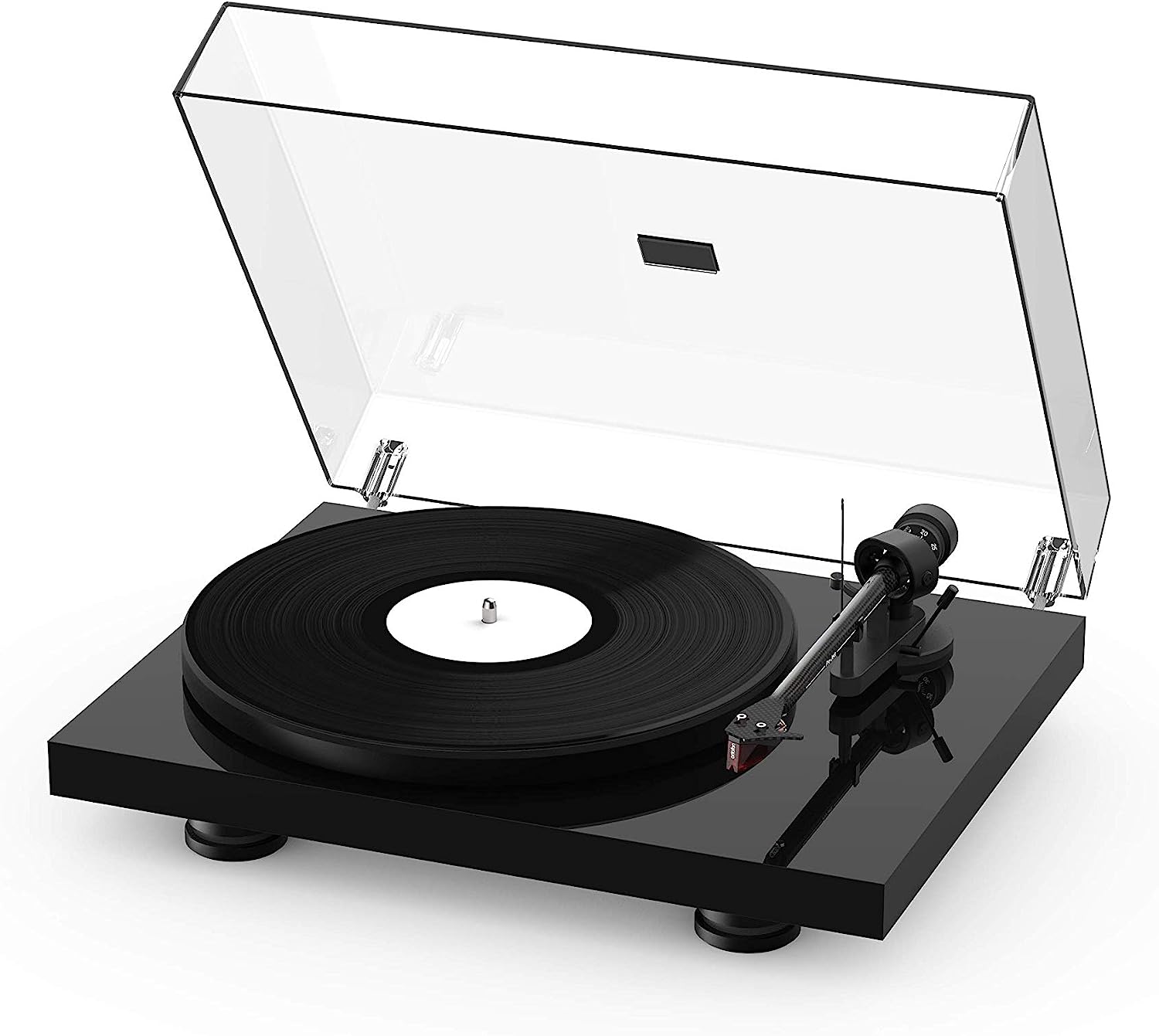
The Pro-Ject Debut Carbon EVO Turntable is a manual belt-drive hi-fi deck aimed at listeners moving beyond basic all-in-one record players. It suits buyers who want a clean, upgradeable turntable and are comfortable using a separate amplifier or phono stage.
Watch the product video
This is not the older Debut Carbon DC, the newer Debut EVO 2 or the step-up Debut PRO. The Debut Carbon EVO sits in the middle ground: serious enough for a proper hi-fi system, but still designed to be approachable for a first dedicated turntable.
Its appeal is strongest for people who value core mechanical design over convenience features. There is no built-in phono preamp, Bluetooth, USB output or automatic operation, so it is best seen as a traditional turntable rather than a plug-and-play lifestyle unit.
Design and build
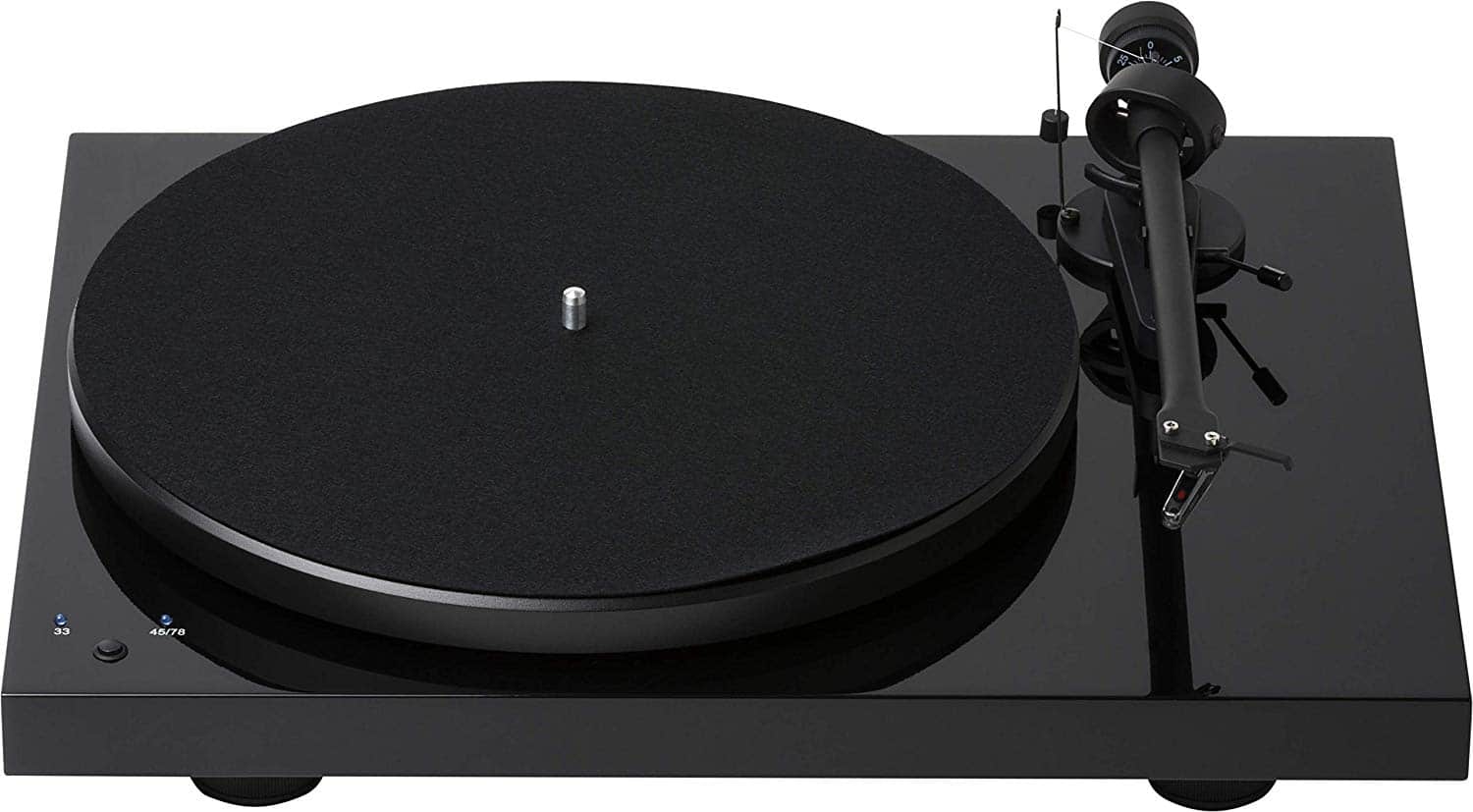
The Debut Carbon EVO uses a simple rectangular MDF plinth with an exposed platter, hinged dust cover and a tidy, minimalist top surface. The speed switch is positioned under the front-left area of the plinth, keeping the main deck uncluttered while still making 33 and 45 rpm changes easy.
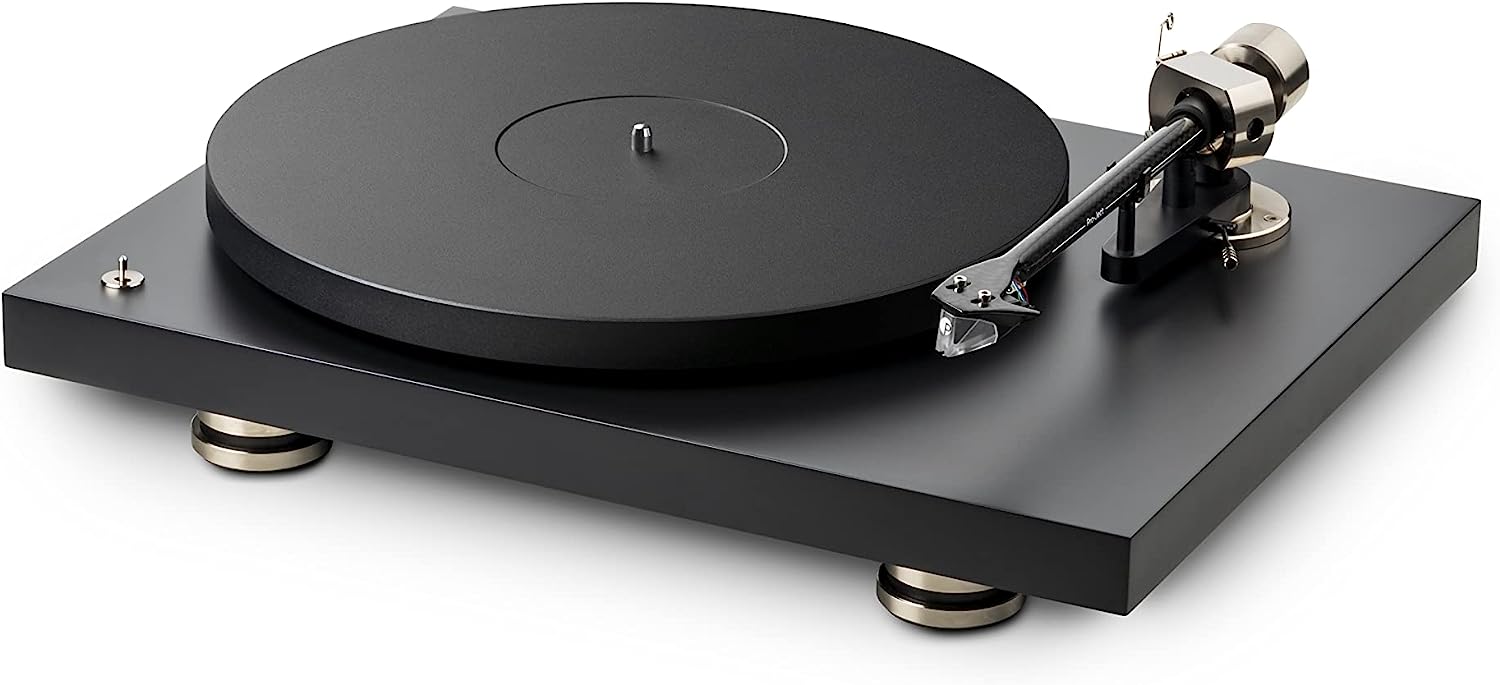
A key part of the design is the 8.6-inch one-piece carbon-fibre tonearm. Its fixed headshell and low-mass construction are intended to provide a more rigid cartridge platform than many entry-level arms, although it does not offer simple on-the-fly VTA adjustment for frequent cartridge experimentation.
The platter is a 300 mm steel design weighing 1.7 kg and uses TPE damping to help control resonance. Three height-adjustable damped metal feet help with levelling and isolation, while rear RCA sockets and a separate earth connection are more flexible than a captive cable.
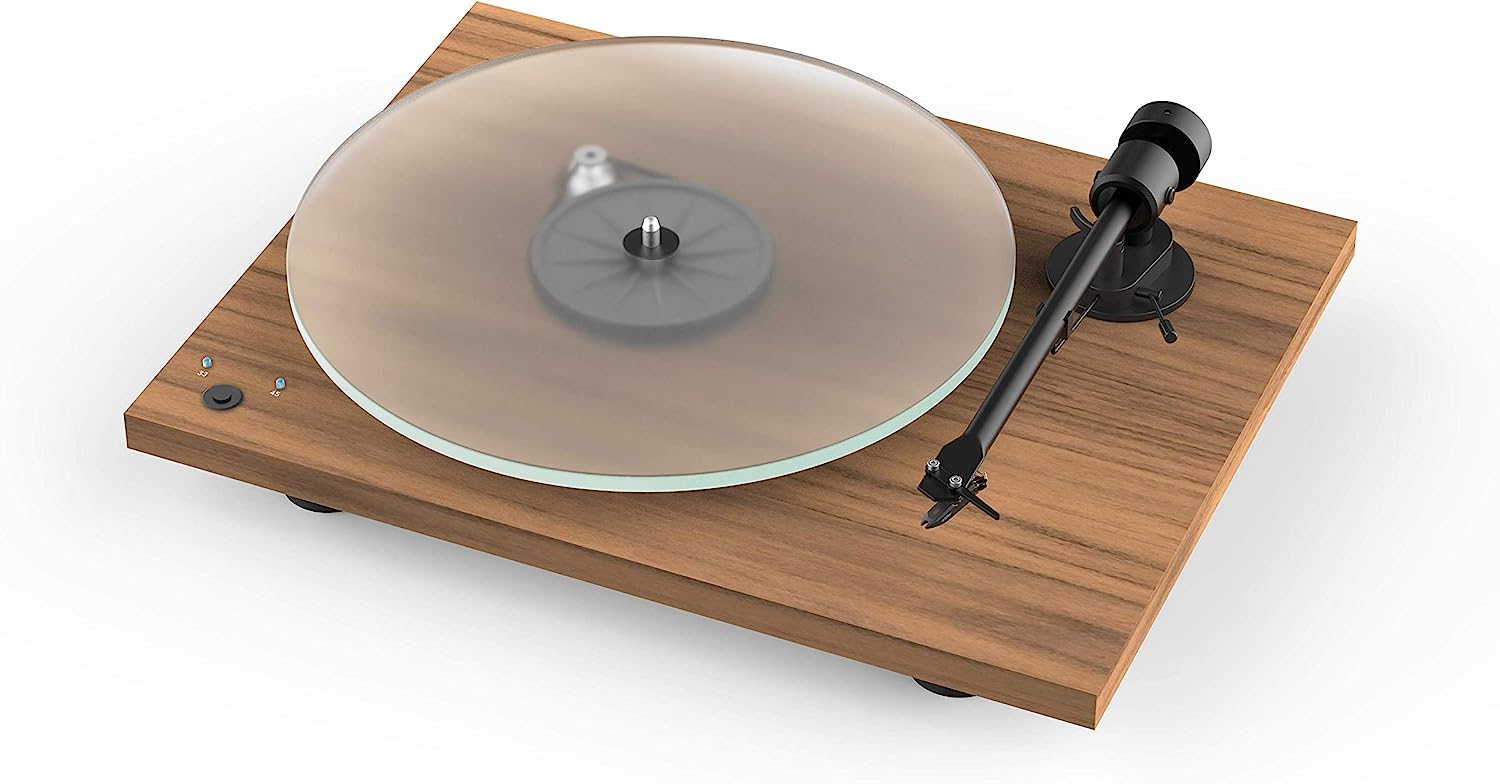
Finish choice is another practical strength. The EVO has been offered in high-gloss, satin and walnut options, making it easier to integrate into a living room system than many plain black alternatives.
Features
Electronic speed control is one of the most useful everyday upgrades over simpler belt-drive decks. You can switch between 33 and 45 rpm without manually moving the belt, which is helpful if your collection includes a regular mix of albums and singles.
The deck can also run at 78 rpm using the supplied round belt, but this is conditional. Shellac 78s require a suitable 78 stylus or cartridge, and the normal LP stylus should not be used for them.
There is no built-in phono stage, so the turntable must feed an MM phono input or an external MM phono preamplifier. That adds a box or requires the right amplifier, but it also leaves room to choose a phono stage that suits the rest of the system.
Cartridge fitment varies by market and listing. Many UK and European versions are associated with an Ortofon 2M Red, while US versions commonly use a Sumiko Rainier, so buyers should confirm the exact supplied cartridge before comparing packages or planning stylus upgrades.
Setup
Setup is straightforward by hi-fi turntable standards, but it is not automatic. You need to fit the belt and platter, install and balance the counterweight, set tracking force, attach the anti-skate weight, connect the RCA and earth leads, and feed the signal into an MM phono input or external phono preamp.
Beginners should allow time for tonearm balancing and anti-skate adjustment, as these are common points of confusion. Once set up, daily use is simple: select the speed, cue the arm with the lift, lower it onto the record and return it manually at the end.
For 78 rpm playback, the process is more involved because the round belt must be fitted and the correct stylus or cartridge used. That makes 78 support a useful extra rather than a casual one-switch feature.
Performance
As a manual belt-drive turntable, the Debut Carbon EVO asks the user to start the motor, cue the arm and return it at the end of the side. It does not provide auto-stop or automatic tonearm return, which keeps the design simple but may not suit anyone used to automatic record players.
The specification includes electronic speed control, stated wow and flutter of ±0.17% at 33 rpm and ±0.15% at 45 rpm, and a signal-to-noise ratio of 68 dB. Those figures support its positioning as a proper hi-fi deck rather than a convenience-first record player.
Connectivity is traditional and system-dependent. The rear RCA outputs and earth terminal are sensible for hi-fi integration, but hum or buzz can occur if grounding, cable routing, phono-stage matching or nearby power supplies are not dealt with carefully.
Day to day, the EVO is likely to feel most rewarding in a stable, level, low-resonance location. It is not designed for DJ use, back-cueing, pitch control or rough handling.
Sound quality
A cautious assessment, based on the design and available review consensus, is that the Debut Carbon EVO is intended to deliver a clean, balanced and detailed presentation for its class. The heavier damped platter, carbon tonearm and separate phono-stage requirement all point towards a turntable focused on mechanical replay rather than extra features.
The final tonal balance will depend partly on the supplied cartridge. Ortofon 2M Red versions may come across as more explicit and revealing, while Sumiko Rainier versions are often discussed as smoother and fuller-bodied, but the exact result will also depend on cartridge alignment, tracking force and the phono stage used.
Its character is best understood as spacious and composed rather than aggressively forceful. Good setup, secure grounding and suitable support furniture are important, as a sensitive vinyl system can expose hum, surface noise and poor pressings more readily than a simpler record player.
Pros
- One-piece carbon-fibre tonearm gives it a serious hi-fi foundation Electronic 33/45 rpm speed switching is convenient for mixed collections TPE-damped 1.7 kg steel platter is a meaningful upgrade over simpler entry decks Rear RCA sockets and separate earth connection support tidy hi-fi installation Wide range of finish options, including satin colours and walnut Upgradeable cartridge and stylus paths depending on supplied version 78 rpm capability is available with the supplied round belt and correct stylus
Cons
- No built-in phono preamp, so extra equipment may be required Fully manual operation with no auto-stop or arm return Supplied cartridge varies by market, which can complicate comparisons Anti-skate weight and tonearm balancing may feel fiddly for beginners
- No simple standard VTA adjustment for frequent cartridge or platter changes Hum can occur if grounding and cable routing are not handled carefully
Verdict
The Pro-Ject Debut Carbon EVO remains a strong choice for buyers who want a traditional, well-specified manual turntable without moving straight into more expensive specialist models. Its carbon tonearm, damped steel platter, electronic speed switching and upgrade potential give it substance beyond entry-level convenience decks.
Its limitations are just as important as its strengths. You must provide an MM phono stage, accept fully manual operation and check the supplied cartridge carefully, particularly when comparing UK, European and US listings.
If it is available at a sensible price, in the finish and cartridge package you want, it is a convincing first serious hi-fi turntable. If buying new and prices are close, it is also worth comparing it with the newer Debut EVO 2 and step-up Debut PRO models before deciding.